
Moonstone belongs to the feldspar group of minerals and is unique among gemstones for the inclusions of different minerals that create an iridescent shimmer known as ‘adularescence.’ The inclusions are essentially different layers of mineral that form an ideal labyrinth for the reflection of the light spectrum, especially indigo and violet. People in ancient India and other parts of Asia believed moonstones to be rays of solidified moonlight, and likened the shimmering hue to a good spirit residing in the stone. For this reason, moonstone is still considered sacred in many parts of India. Moonstone is the birthstone for the month of June, and is given on the occasion of 13th anniversaries.
Many consider the moonstone to be the true “lover’s stone.” The ancient Greeks called moonstone Aphroselene, combining the names of Aphrodite, the goddess of love, with Selene, the goddess of the moon. The ancient Greeks weren’t the only ones to associate the moonstone with love, fertility, and fidelity: this particularly captivating gemstone has often been worn in diverse cultures with the belief that it has the power to enchant a faithful lover. Perhaps it is the subtle shimmer of the moonstone that has encouraged its association with the ethereal qualities of emotion, the subconscious, and love. Some believe the moonstone has the ability to help us be more intuitive and understanding creatures.
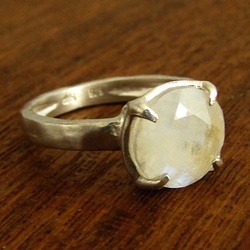 Whatever the cause of moonstone’s airy, gossamer beauty, the Monhegan Moonstone Engagement Ring is a piece to be deeply cherished.